
What is the CTR of SMS messages? Text message technology does not allow you to calculate click-through rates, but there are ways to measure this information. In this blog post, we'll show you how you can track SMS click-through rates using UTM parameters and get a more accurate picture of how your campaigns are performing.
What are UTM parameters?
Urchin Tracking Module (UTM) parameters are identifiers added to a URL that allow you to track traffic and its sources. These parameters help you analyse where traffic is coming from and how it behaves on your site. Commonly used UTM parameters are:
- utm_source: indicates the source of the traffic (e.g. newsletter, social media).
- utm_medium: indicates the marketing channel (e.g. email, sms).
- utm_campaign: gives the name or identifier of the campaign.
- utm_term: usually used in paid search campaigns to track keywords.
- utm_content: used to distinguish between different links or versions within the same campaign.
How are UTM parameters used?
UTM parameters allow you to monitor exactly how effectively your SMS campaigns are performing. When you add UTM parameters to your links, you can see in an analytics tool (Google Analytics, HubSpot, Plausible or similar) exactly how much traffic each campaign, message and link is bringing to your site. This allows you to measure click-through rates, i.e. how many recipients click on a link in a text message.
How do I get UTM parameters for links in SMS messages?
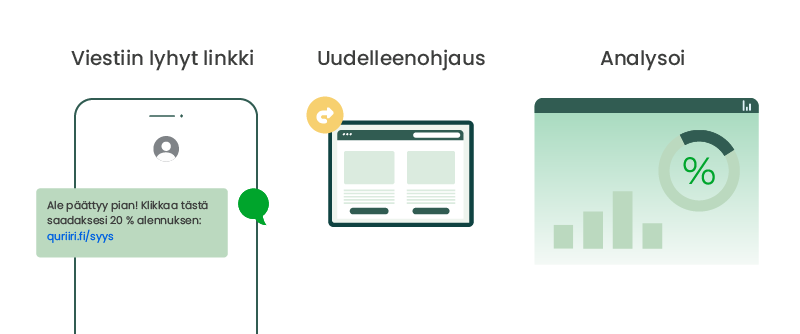
In text messages, it is best to keep links as short as possible for readability and character count. Adding UTM parameters to links will lengthen the URL considerably. However, the problem can be solved by placing a short link in the text message without UTM parameters and redirecting to the actual URL.
This is how you add UTM parameters to the link in the SMS:
1) Create UTM parameters: you can use a UTM parameter creation tool such as Google Campaign URL Builder, or create the URL yourself. Enter the information you want, for example:
- Website URL: the URL of the website to which you want to direct traffic, e.g. https://quriiri.fi/syyskampanja/
- Campaign Source: for example, ’quriiri’.
- Campaign Medium: kanavana ’sms’.
- Campaign Name: the name of the campaign, for example ’autumn24’.
For example, the URL could look like this:
https://quriiri.fi/syyskampanja/?utm_source=quriiri&utm_medium=sms&utm_campaign=syksy24
2) Create a redirect: think about the type of URL you want to include in the SMS. From this URL, redirect to a URL containing the UTM parameters you want, e.g:
quriiri.fi/autumn
→
https://quriiri.fi/syyskampanja/?utm_source=quriiri&utm_medium=sms&utm_campaign=syksy24
Another way to shorten a link is to use link shorteners such as Bitly or TinyURL, but we do not recommend these, as it converts the link into an unrecognisable format and the recipient cannot determine the address to which the link leads.
3) Add a link to the SMS: include a short link in your SMS with an attractive call to action (CTA). For example: ”Click here to get a 20 % discount: [link]”.
Redirect redirects traffic to an address containing UTM parameters, allowing your analytics tool to display the data to be tracked.
4) Monitor and analyse: when recipients click on a link in a text message, you can track these clicks through your analytics tool. With your analytics tool, you can see how many times the link has been clicked, which campaign and message the traffic came from, and much more.
Summary
Measuring click-through rates for text messages can be challenging without the right tools, but UTM parameters can give you valuable insights into the effectiveness of your campaigns. By following these tips, you can improve your SMS campaigns and better optimise your marketing efforts.
Always remember to test and analyse results regularly to make informed decisions and improve your strategies. If you have any questions, we are happy to help!