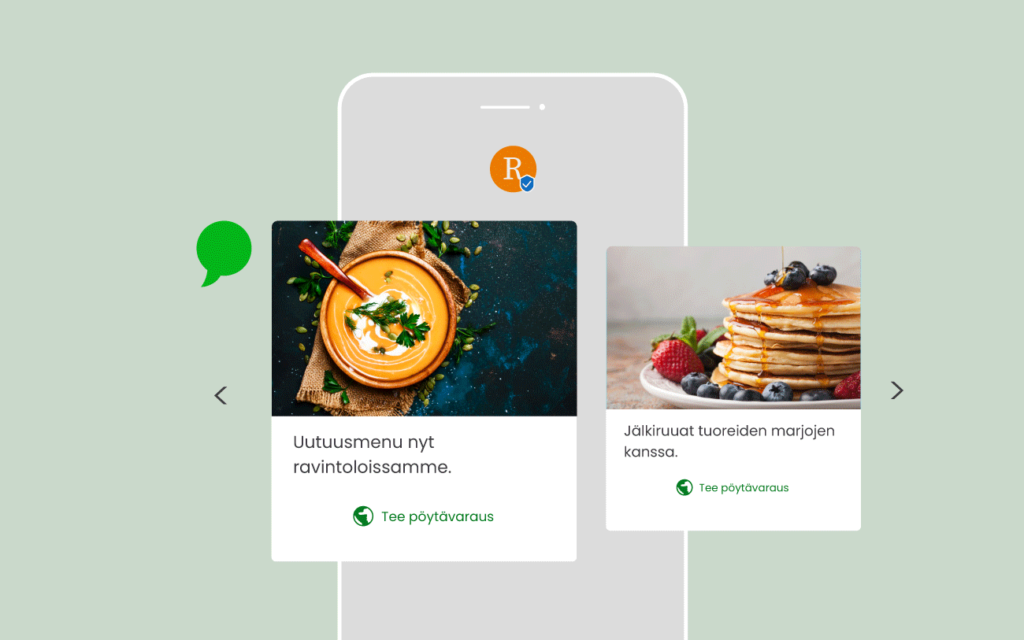
Text message marketing often raises questions: can a company send messages to anyone - and when is permission needed? We've put together a clear five-point guide on what you should consider when sending text messages to customers.
1. Is it direct marketing or customer communication?
The law makes a distinction between customer communications and direct marketing. For example, if a shop informs a customer that a product is available for collection, this is permitted customer communication. On the other hand, the message may not include advertising for other products without specific permission.
If the message contains commercial content or marketing, it is considered direct marketing - and requires the customer's consent.
2. Consent to SMS marketing - what does the law say?
Prior consent is always required for marketing messages sent to consumers. This must be based on an active choice by the customer, such as ticking a blank box. A pre-checked box is not a valid consent.
One way to collect consent is to use an SMS keyword, such as ”CLUB”, to join a mailing list. It is important to clearly communicate what the customer is committing to by joining.
In some cases, communication is allowed without specific permission - for example, if contact information is obtained in connection with the sale of a product or service, and the messages are about similar products. Even then, the customer must be informed of the right to opt-out, and this option must be offered with each communication.
3. B-to-B direct marketing can be done more freely for businesses than for consumer customers
The rules between businesses and communities are slightly different from those between businesses and consumers. The customer's consent is not required when the customer is an entity, i.e. when the message is sent to a public number of the company. If the recipient is a natural person, for example an employee of the company, the products or services being marketed must be related to the employee's duties.
Each message should still include a clear and free option to opt-out of the use of contact details for marketing purposes.
4. The possibility to opt-out of messages
The customer must always have the option to unsubscribe from marketing messages. In a text message, this can be easily done with the keyword ”cancel”, which the recipient can send in reply.
It's good to be open about unsubscribing and the processing of personal data - it builds trust and improves the customer experience.
Quriirin allows you to easily manage your contacts, provide on and off options and keep your customer register up to date.
5. Useful content = satisfied recipient
Asking for a marketing authorisation is more of an opportunity than a barrier. When you are transparent about how the data will be used and provide genuinely useful content, your messages will be remembered positively.
Well thought-out text messages can delight, help or benefit your customers - and they'll want to hear from you again.
How are marketing messages sent?
With the Quriiri, you can send messages quickly and easily. Check it out and try it for free.
📝 For more information on electronic direct marketing, see for example the following websites: Data protection.fi, Finlex.fi, Competition and Consumer Authority and Minilex.fi.